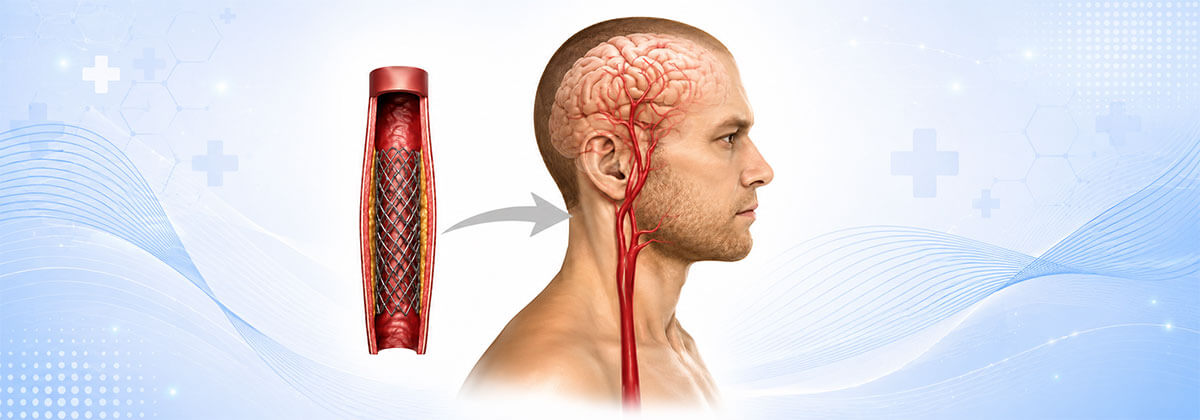
Advanced Carotid & Intracranial Stenting for Stroke Prevention
Narrowed or plaque-clogged arteries leading to or inside the brain pose a severe, ongoing threat of ischemic stroke. Dr. Pradyumna Oak provides expert evaluation, stroke risk assessment, and advanced endovascular revascularization using Carotid and Intracranial Stenting to restore healthy blood flow to oxygen-deprived brain tissue.
Combining modern neurointerventional technology, embolic protection systems, and evidence-based protocols, Dr. Oak treats severe arterial stenosis safely—dramatically reducing the risk of stroke, protecting long-term brain health, and improving quality of life.
What is Carotid & Intracranial Stenting?
Carotid Artery Stenting (CAS) and Intracranial Stenting are minimally invasive, catheter-based endovascular procedures designed to widen severely narrowed blood vessels supplying the brain. Atherosclerotic plaque buildup (stenosis) restricts blood flow and creates high-risk surfaces where blood clots can easily form and travel directly into cerebral arteries.
During stenting, a small catheter is guided through a blood vessel in the groin or wrist up to the target artery. A tiny balloon inflates to widen the narrowed section (angioplasty), and a expandable metal mesh tube (stent) is permanently deployed to hold the artery wide open. In carotid procedures, specialized embolic protection filters are used during stenting to catch any dislodged plaque debris before it reaches the brain.
Symptoms You Should Never Ignore
Carotid and intracranial arterial narrowing reduces vital blood flow to the brain and can cause blood clots to dislodge, triggering severe strokes or TIAs. Consult a specialist immediately if you experience:
- Sudden numbness or weakness in the face, arm, or leg (especially on one side of the body)
- Sudden difficulty speaking, slurred speech, or difficulty understanding spoken words
- Amaurosis Fugax (sudden, temporary loss of vision in one eye, often described as a shade pulled down)
- Sudden dizziness, loss of balance, or unsteadiness while walking
- Frequent transient ischemic attacks ("mini-strokes" with symptoms resolving within minutes to hours)
- Sudden severe, unexplained headaches or lightheadedness
- Memory decline or cognitive slowdown secondary to chronic cerebral hypoperfusion
Even transient, fleeting symptoms can be severe warning signs of critical arterial stenosis and an impending major stroke.
Conditions & Scenarios We Evaluate & Treat
Our neurointerventional service provides specialized diagnosis, risk stratification, and endovascular treatment across various cerebrovascular arterial diseases, including:
Severe Carotid Artery Stenosis (>70% Blockage)
Endovascular revascularization for patients with significant narrowing of the internal carotid artery in the neck to prevent major hemispheric strokes.
Symptomatic Intracranial Atherosclerotic Disease (ICAD)
Targeted balloon angioplasty and stenting for severely narrowed arteries inside the brain (such as the MCA or basilar artery) resistant to medical therapy.
Recurrent TIAs & Ischemic Strokes Despite Medical Therapy
Interventional treatment for patients who continue to experience "mini-strokes" or ischemic symptoms despite optimal antiplatelet medications.
High-Risk Surgical Patients (Post-Radiation or Re-stenosis)
A safe, minimally invasive alternative to open surgery (Carotid Endarterectomy) for patients with prior neck radiation, hostile neck anatomy, or recurrent stenosis.
Vertebrobasilar Insufficiency (VBI)
Stenting of narrowed vertebral or basilar arteries supplying the brainstem and cerebellum to treat severe dizziness, unsteadiness, and double vision.
Carotid & Intracranial Artery Dissections
Stent reconstruction for arterial wall tears caused by trauma or spontaneous vessel weakness that compromise blood flow or form aneurysms.
Tandem Lesions (Combined Extracranial & Intracranial Stenosis)
Comprehensive endovascular planning and staged stenting for multi-level arterial blockages in both the neck and brain vessels.
Post-Stroke Secondary Prevention
Long-term vascular follow-up, plaque stabilization monitoring, and medication optimization to stop stroke recurrence.
Our Diagnostic Approach
A comprehensive vascular evaluation is crucial to measure the exact percentage of blockage, evaluate plaque vulnerability, and plan catheter navigation. Diagnostic steps include:
- Carotid Doppler Ultrasound (for non-invasive initial screening of neck arterial flow velocity)
- High-resolution CT Angiography (CTA) of head and neck blood vessels
- Brain MRI and MR Angiography (MRA) to detect silent brain infarctions
- Digital Subtraction Angiography (DSA) — the definitive gold-standard imaging modality to measure exact vessel lumen and lesion length
- Assessment of collateral cerebral circulation dynamics
- Complete cardiovascular workup (Echocardiogram and Holter monitoring) to rule out cardiac embolic sources
Every imaging modality is selected to ensure that stenting is performed on anatomically appropriate candidates who will gain the greatest long-term stroke prevention benefit.
Personalized Treatment Plans
Treatment strategy is customized according to the location of the blockage, patient age, plaque stability, and overall medical condition:
- Percutaneous Carotid Artery Stenting with Embolic Protection Filter Systems
- Intracranial Balloon Angioplasty and Micro-Stent Placement
- Dual Antiplatelet Therapy (DAPT) protocol management before and after stenting
- Aggressive lipid-lowering therapy (high-potency statins) to stabilize arterial plaque
- Comprehensive hypertension and diabetes control plans
- Intensive post-procedure hemodynamic and blood pressure monitoring in the Neuro-ICU
- Scheduled follow-up Doppler Ultrasounds and CTA tracking to confirm long-term stent patency
Book an Appointment
If you have been diagnosed with carotid artery blockage, experience frequent TIA mini-strokes, or have been advised to undergo vascular evaluation, early expert care is vital. Timely diagnosis and precise stenting can prevent irreversible stroke damage and secure long-term brain health.
Schedule your consultation with Dr. Pradyumna Oak today for expert vascular evaluation and advanced stenting care.
Frequently Asked Questions (FAQs)
Find answers to common questions about Carotid and Intracranial Stenting procedures.