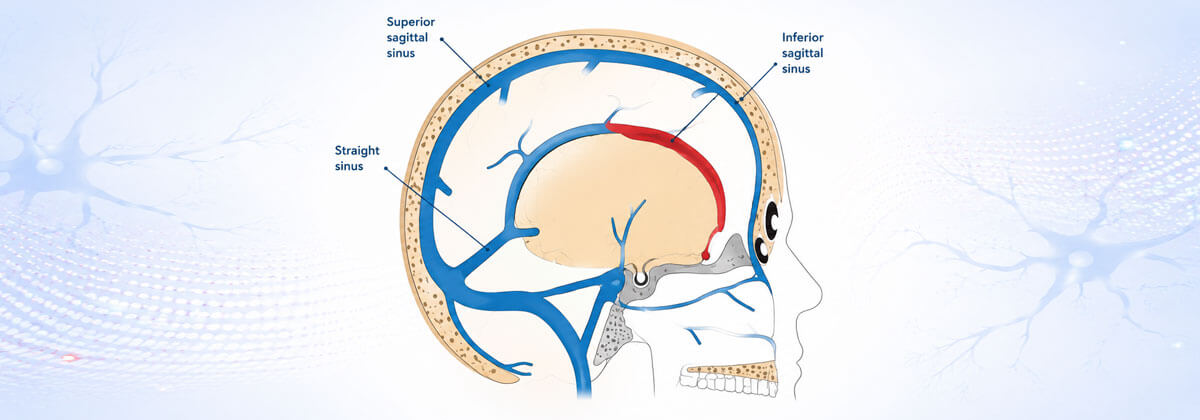
Venous Disorders
Venous disorders of the brain affect the veins and venous sinuses responsible for draining blood from the brain. Conditions such as Cerebral Venous Sinus Thrombosis (CVST) and Venous Sinus Stenosis can lead to increased intracranial pressure, severe headaches, vision problems, pulsatile tinnitus, and even stroke. Early diagnosis using advanced neuroimaging and timely neurointerventional treatment can prevent serious complications and significantly improve patient outcomes.
Conditions We Treat
- Cerebral Venous Sinus Thrombosis (CVST)
- Venous Sinus Stenosis
- Idiopathic Intracranial Hypertension (IIH)
- Raised Intracranial Pressure
- Chronic Cerebral Venous Outflow Obstruction
- Venous Hypertension
Our Specialized Services
We provide comprehensive evaluation and minimally invasive treatment for patients with cerebral venous disorders using advanced diagnostic techniques and state-of-the-art neurointerventional procedures.
- Cerebral Venous Sinus Thrombosis (CVST) Evaluation
- Venous Sinus Stenosis Assessment
- Venous Sinus Stenting
- Transvenous Sinus Manometry
- Diagnostic Cerebral Angiography
- Long-term Neurovascular Follow-up
Cerebral Venous Sinus Thrombosis (CVST) Evaluation
CVST occurs when a blood clot blocks one or more venous sinuses that drain blood from the brain. This blockage increases pressure within the skull and may result in headaches, seizures, vision changes, weakness, or stroke. A detailed evaluation using MRI, MR Venography (MRV), CT Venography (CTV), and cerebral angiography helps establish an accurate diagnosis and guides appropriate treatment.
Venous Sinus Stenosis Assessment & Stenting
Venous sinus stenosis is the narrowing of one or more major cerebral venous sinuses, restricting normal blood drainage from the brain. It is commonly associated with persistent headaches, pulsatile tinnitus, papilledema, and Idiopathic Intracranial Hypertension (IIH). Patients with significant narrowing and pressure gradients may benefit from minimally invasive venous sinus stenting to restore normal venous blood flow and relieve symptoms.
Transvenous Sinus Manometry
Transvenous sinus manometry is a specialized diagnostic procedure performed during cerebral angiography to measure pressure within the brain's venous sinuses. It helps determine whether a narrowing is causing clinically significant obstruction and identifies patients who are likely to benefit from venous sinus stenting.
Common Symptoms
- Persistent or severe headaches
- Blurred or double vision
- Pulsatile tinnitus (whooshing sound in the ear)
- Papilledema (optic nerve swelling)
- Seizures
- Weakness or numbness
- Difficulty speaking
- Vision loss due to raised intracranial pressure
Diagnosis
An accurate diagnosis is essential for selecting the most effective treatment. Depending on the patient's symptoms, one or more of the following investigations may be recommended.
- Comprehensive Neurological Examination
- MRI Brain
- MR Venography (MRV)
- CT Venography (CTV)
- Digital Subtraction Angiography (DSA)
- Transvenous Sinus Manometry
Benefits of Endovascular Treatment
- Minimally invasive procedure
- Faster recovery compared to open surgery
- Reduced hospital stay
- Improved venous blood drainage
- Relief from headaches and raised intracranial pressure
- Better quality of life with long-term symptom control
Frequently Asked Questions (FAQs)
Find answers to common questions about cerebral venous disorders and their diagnosis and treatment.